
PROJECT
Fisherman's Island Bulk Berth 2 SAP
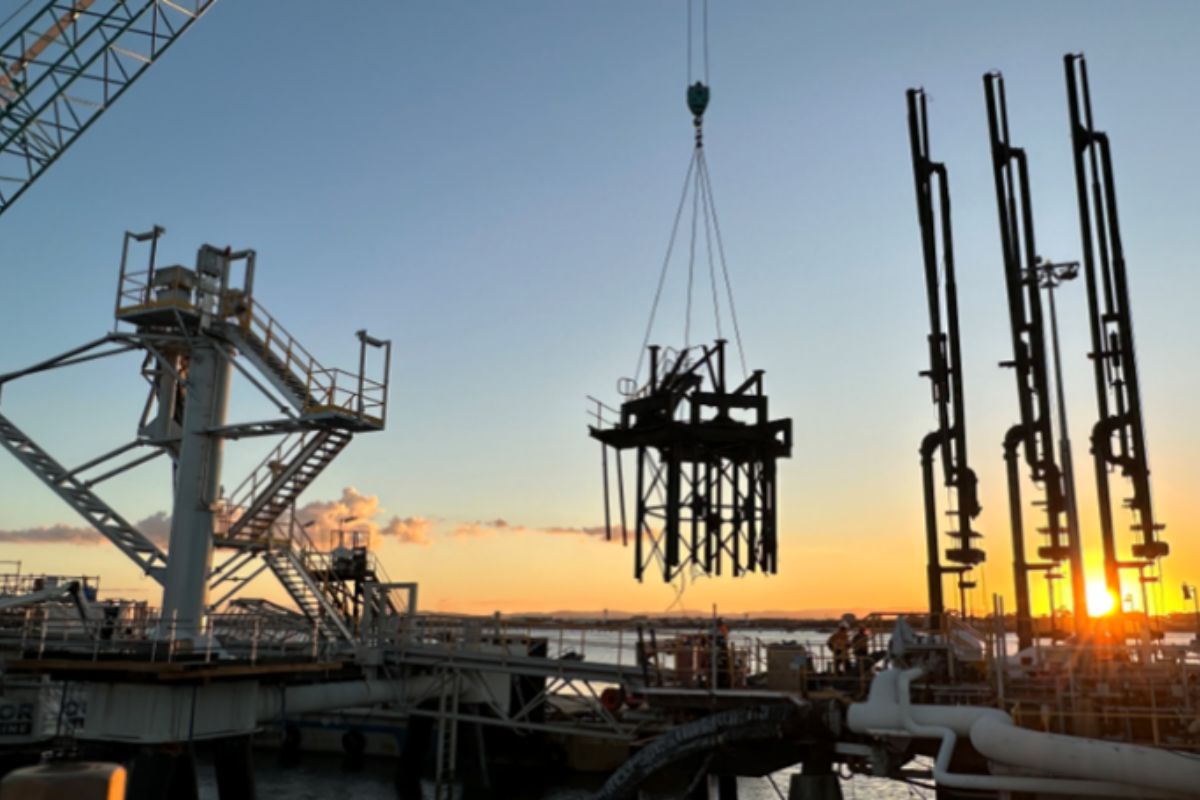
The Fisherman's Island's Bulk Berth 2 (FIBB2), commonly referred to as the "Crude Wharf", was originally constructed by Ampol in the 1960s to serve the Lytton Oil Refinery. The berth is now owned by the Port of Brisbane and is a critical fuel import facility. A key operational asset, the berth's ship gangway tower was identified as needing replacement due to its age and condition as it neared end-of-life. The project involved the full replacement of the ship's access platform (SAP) to ensure safety, operational efficiency, and compliance, while maintaining uninterrupted use of this heavily utilised facility.
PROJECT HIGHLIGHTS
Location
Fishermans Island, Port of Brisbane
Client
Port of Brisbane Pty Ltd
Project Value
Client confidential
Contract Period
May 2021 - May 2024
PROJECT BACKGROUND
The Crude Wharf is a key operational asset. The berth's ship gangway tower was identified as needing replacement due to its age and condition as it neared end-of-life. The tower was not capable of servicing all vessels and was nearing the end of its serviceable life. An options determined that repair or partial replacement was not viable, and that a full replacement was required to safeguard and futureproof operations.
The berth's age and limited deck space coupled with ongoing upgrade plans from new customers, created significant delivery challenges. The berth is classified as a Major Hazard Facility, requiring compliance with stringent legal and regulatory standards. In addition, the project had to be delivered with limited disruption to day-to-day shipping operaitons, making planning, risk management, and stakeholder engagement critical.
The construction process was carefully planned in conjunction with customers to ensure the new Ship's Access Platform (SAP) could be installed without adversely impacting operations. Given the restricted 2m x 2m footprint of the dolphin pile cap, CPM developed an innovative approach that relied on offsite pre-assembly of the SAP and delivery by barge. This enabled the structure to be installed in just three major lifts rather than over several days of over-water works.
A jack-up barge provided a stable working platform for the 200-tonne crane operating adjacent to live marine loading arms and fuel lines. Detailed lift studies, method statements, and rigorous contractor vetting ensure the highest levels of safety. Construction "windows" were established in coordination with shipping schedules with possession of site granted and rescinded between vessel arrivals.
CPM SCOPE OF WORK
CPM was engaged to lead the planning, procurement, and delivery of the new ship's access platform, with scope including:
- Conduct market sounding to identify and evaluate potential suppliers, based on technical capability, track record, cost and delivery timeframes.
- Managing an Early Contractor Involvement (ECI) phase to refine technical solutions, clarify scope and budget, address stakeholder requirements, and establish a suitable contracting model.
- Ensuirng compliance with Major Hazard Facility requirements, including RPEQ certification, Queensland Hazardous Area design approvals, factory acceptace testing in Amsterdam, and implementation of risk mitigation measures through bank guarantees and staged payments.
- Developing an innovative installation strategy that relocated the SAP from the loading platform to a spring line dolphine pile cap. This solution improved safety, elimited tidal restrictions, avoided wharf strengthening.
- Overseeing the complex offshore installation works, including use of a jack-up barge, bespoke temporary works, pre-assembly and transport of the SAP.
KEY ACHIEVEMENTS
- Maintained Critical Fuel Supply Operations: The new Ship's Access Platform was delivered and commissioned without adversely impacting shipping, ensuring continuity of operations at one of Queensland's most critical fuel import facilities.
- Delivered a Breakthrough Engineering Solution: By relocating the SAP to a dolphin pile cap from the loading platform, CPM achieved a solution that impoved operational safety, eliminated tidal restrictions, avoided costly wharf strengthening, and streamlined approvals. This innovative approach provided long-term value for the client while reducing program and budget risk.
- Set a Benchmark for Risk and Compliance Management: Through rigorous planning, independent certificaiton, overseas factory acceptance testing, and innovative contracting arrangements, CPM ensured the project fully complied with stringent Major Hazard Facility Requirements. These measures not only mitigated design, safety, and commercial risks but also provided the client with confidene in both the technical solution and delivery model.
RELATED PROJECTS
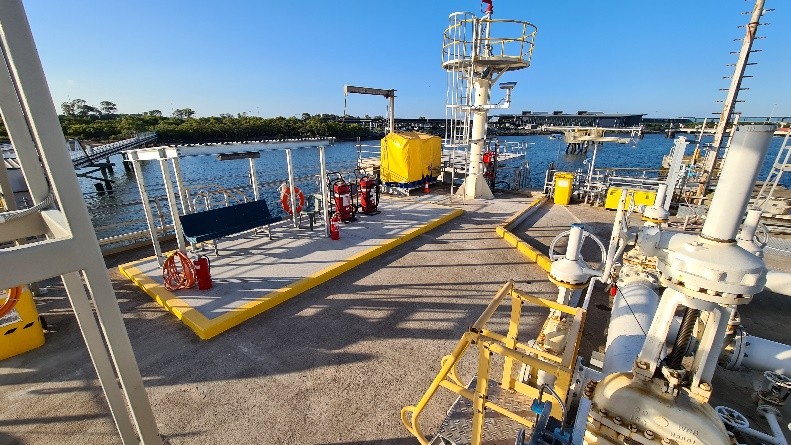
Port of Brisbane Fuel Infrastructure Upgrades
Port of Brisbane completed fuel infrastructure upgrade works at its three Brisbane berths used for fuel imports. The upgrades to existing facilities improved future asset reliability and reduced operational risks.
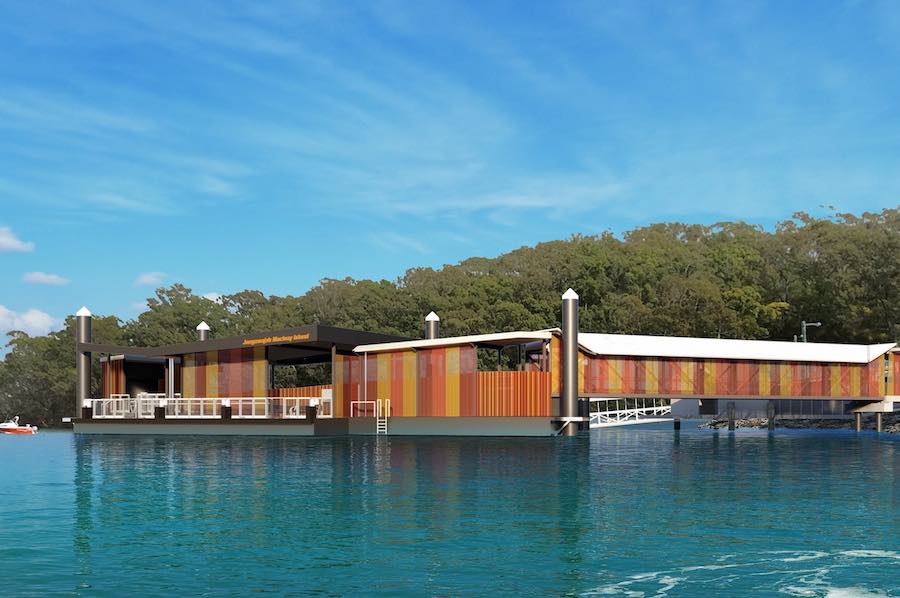
DTMR – Southern Moreton Bay Islands Ferry Terminals
Redland City Council and Department of Transport and Main Roads partnered to deliver new ferry terminals at Russell, Macleay, Lamb, and Karragarra islands in consultation with island communities, Quandamooka Yoolooburrabee Aboriginal Corporation, SeaLink, and other key stakeholders. The project included repurposing the existing ferry pontoons and jetties for recreational boating use.

Port of Brisbane International Cruise Terminal
Port of Brisbane Pty Ltd (PBPL) developed a new $177 million cruise facility for Brisbane and South East Queensland near the mouth of the Brisbane River at Luggage Point. The purpose-built cruise terminal facility caters for both domestic and international cruise tourism by accommodating vessels of all sizes to use Brisbane as a base port, transforming the city into a major cruise destination.